Key Engineering Takeaways
- •Direct Current (DC) flows in a single fixed direction with constant polarity; generated by batteries, solar panels, and DC power supplies.
- •Alternating Current (AC) continuously changes direction and magnitude in a smooth sine wave; standard mains grid power (120V@60Hz or 230V@50Hz).
- •RMS Voltage (V_RMS = 0.707 · V_peak) represents the equivalent DC heating power of an AC sine wave.
- •AC is chosen for national power transmission because step-up transformers can boost voltage to hundreds of kilovolts, drastically minimizing I²R wire losses.
- •All microcontrollers (ESP32, Arduino, Raspberry Pi) and robotic sensors require steady, ripple-free DC power.
- • Basic Voltage and Current understanding
- • Oscilloscope (or visual simulator)
- • AC-to-DC Wall Adapter (12V/5V)
- • Multimeter (AC/DC mode)
What is Direct Current (DC)?
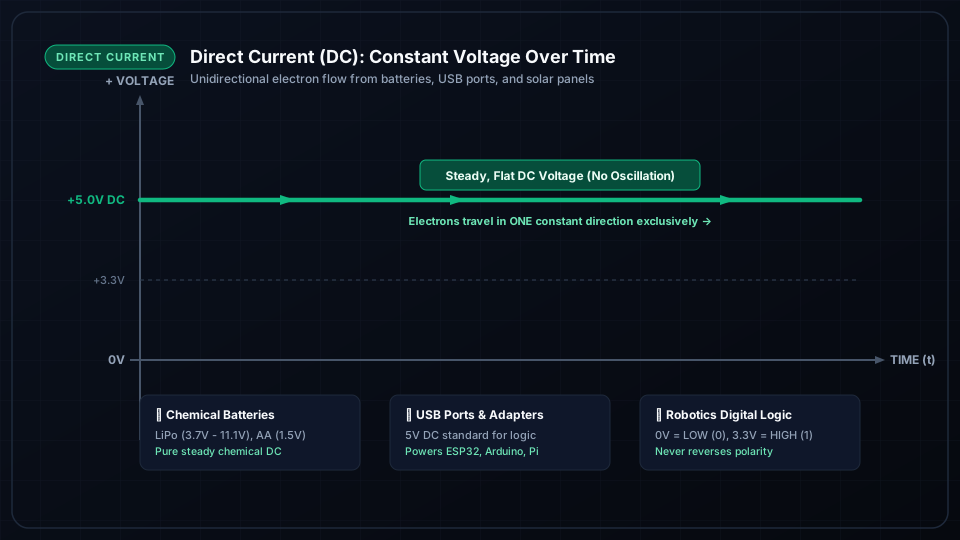
In Direct Current (DC), electrical charge flows steadily in one constant direction—just like water flowing down a calm stream. The voltage stays flat and steady over time without alternating or flipping polarity.
Common Everyday Sources of DC:
- Chemical Batteries: AA (1.5V), 9V block, 18650 Lithium-ion (3.7V), and robot LiPo packs (7.4V - 22.2V).
- Solar Panels: Sunlight directly excites electrons to produce steady DC electricity.
- DC Power Supplies & USB Ports: Regulated 5V, 12V, or 24V power rails.
In robotics and embedded computing, 99% of all digital circuits run on DC because microcontrollers and sensors require rock-solid voltage thresholds (0V represents LOW / OFF, and 3.3V or 5V represents HIGH / ON).
What is Alternating Current (AC)? Sine Waves & Frequency
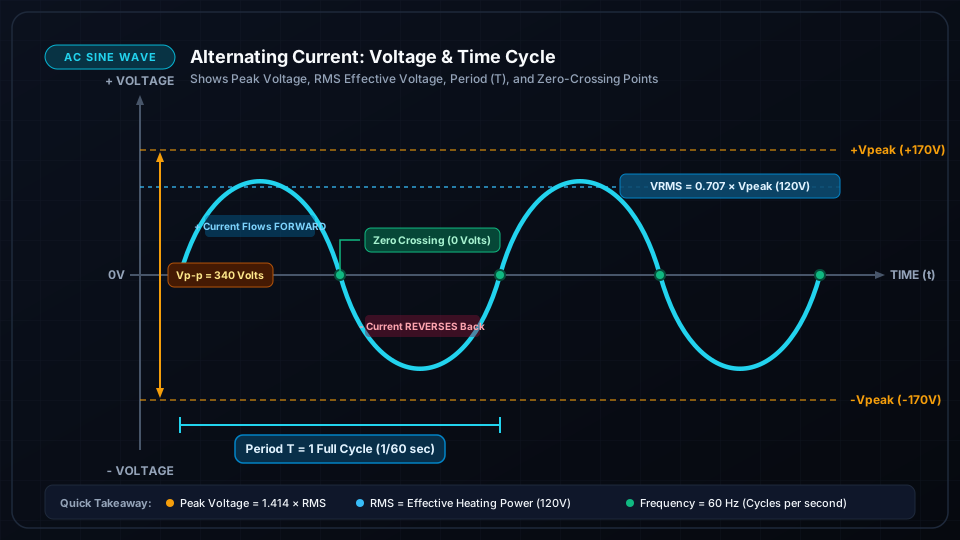
In Alternating Current (AC), the flow of electric charge periodically reverses direction back and forth, like the tide of the ocean. The voltage starts at zero, smoothly climbs to a positive peak, drops back through zero to a negative peak, and repeats in a continuous wave (called a sine wave).
Key Waveform Concepts Made Simple:
- Cycle: One complete back-and-forth movement (one positive wave + one negative wave).
- Period (T, in seconds): The time it takes for the wave to complete one full cycle.
- Frequency (f, in Hertz / Hz): The number of full cycles that happen every second (Frequency = 1 / Period).
- Zero Crossing: The instant when the voltage drops to exactly 0 Volts as it flips direction.
World Standards:
- North America: 120V AC at 60 Hz (the current reverses direction 120 times every second!).
- Europe, Asia, India, UK: 230V AC at 50 Hz (the current reverses direction 100 times every second!).
Peak Voltage vs RMS (Root Mean Square) Voltage
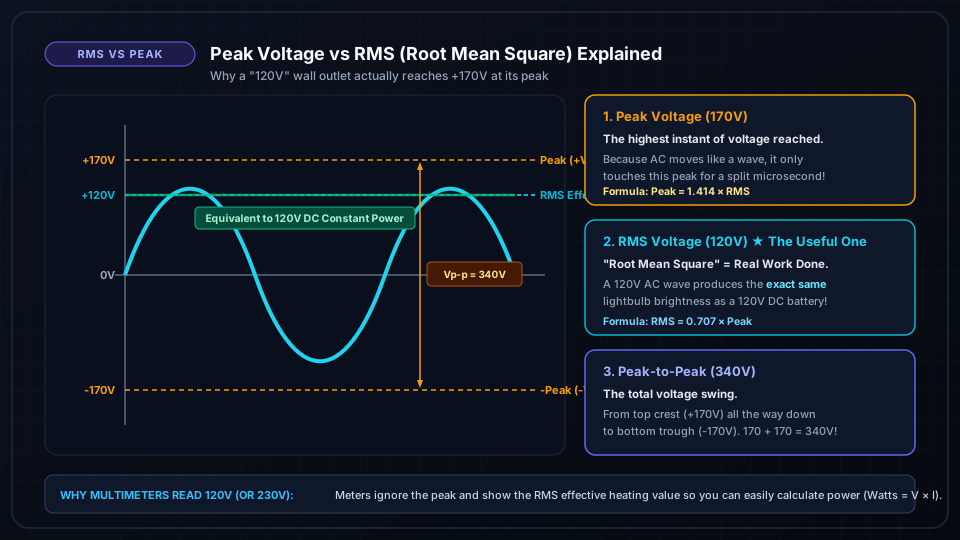
When a wall outlet is labeled 120V (or 230V), that number is not the peak voltage—it is the RMS (Root Mean Square) voltage.
What is RMS and Why Does It Matter?
Because an AC sine wave is constantly moving—rising to a peak, dropping to zero, and plunging negative—it does not deliver peak voltage all the time.
RMS is the "effective work voltage": it tells you what equivalent DC voltage would produce the exact same heating power in a circuit or lightbulb.
The Simple Conversion Formulas:
- Peak Voltage = 1.414 × RMS Voltage
- RMS Voltage = 0.707 × Peak Voltage
Real-World Example: A Standard 120V Wall Outlet
- RMS (Effective Voltage): 120 Volts
- Peak Voltage: 120V × 1.414 = 170 Volts (the voltage swings up to +170V and down to -170V)
- Peak-to-Peak Voltage: 2 × 170V = 340 Volts total swing!
A lightbulb plugged into a 120V AC wall socket shines with the exact same brightness as if it were connected to a steady 120V DC battery pack. That is why multimeters and electric utility companies always quote RMS!
Why is AC Used for Power Grids? (Transformers & Low Loss)
During the famous "War of the Currents" between Thomas Edison (who backed DC) and Nikola Tesla / George Westinghouse (who backed AC), AC won for nationwide power grids because of one key device: the Transformer.
Transformers operate on electromagnetic induction, which only works with changing (alternating) magnetic fields. Power lost as wasted heat in power lines depends heavily on current:
Power Loss = Current² × Wire Resistance
By using a transformer to step up AC voltage to extreme heights (like 400,000 Volts), the current drops to a tiny fraction. Cutting the current by 40 times reduces line heating loss by an incredible 1,600 times!
Once the high-voltage lines reach your neighborhood, step-down transformers safely reduce the voltage back down to 120V or 230V for your home.
How AC is Converted to Clean DC (Rectifiers & Regulators)
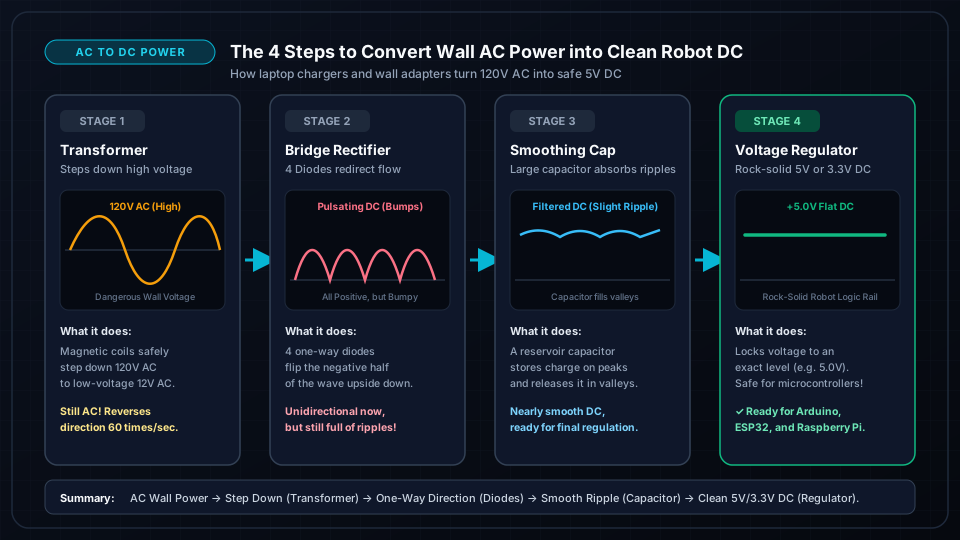
Since robots, microcontrollers, and computers cannot tolerate alternating voltage, every laptop charger and wall adapter turns wall AC into smooth, rock-solid DC through 4 simple stages:
- 1Step-Down Transformer: Safely lowers dangerous 120V/230V AC to a safe low-voltage AC (like 12V AC).
- 2Diode Bridge Rectifier: Uses 4 one-way diodes to flip the negative half of the wave upward, making all current flow in a single direction (pulsating DC bumps).
- 3Smoothing Filter Capacitor: Acts like a small water reservoir—storing charge at wave peaks and releasing it during valleys to smooth out the bumpy ripples.
- 4Voltage Regulator: Locks the output to an exact, flat DC voltage (like +5.0V or +3.3V DC) with zero ripple, making it 100% safe for microcontrollers like Arduino, ESP32, and Raspberry Pi.
Frequently Asked Questions
Can you plug a DC device into an AC wall socket directly?
No! Connecting a DC device directly to AC will reverse polarity 50-60 times per second, immediately destroying capacitors, transistors, and ICs. Always use an AC-to-DC adapter.
Can batteries supply AC power?
No. Chemical reactions in batteries always produce DC. To get AC from a battery (such as running household appliances in an RV or solar home), you must use an electronic Inverter.