Kinematics & Control
Understand the mathematical backbone of motion: Denavit-Hartenberg (DH) conventions, homogeneous transformation matrices, analytical and numerical Inverse Kinematics, Jacobian matrices, trajectory generation, and PID feedback tuning.
All Guides in Kinematics & Control
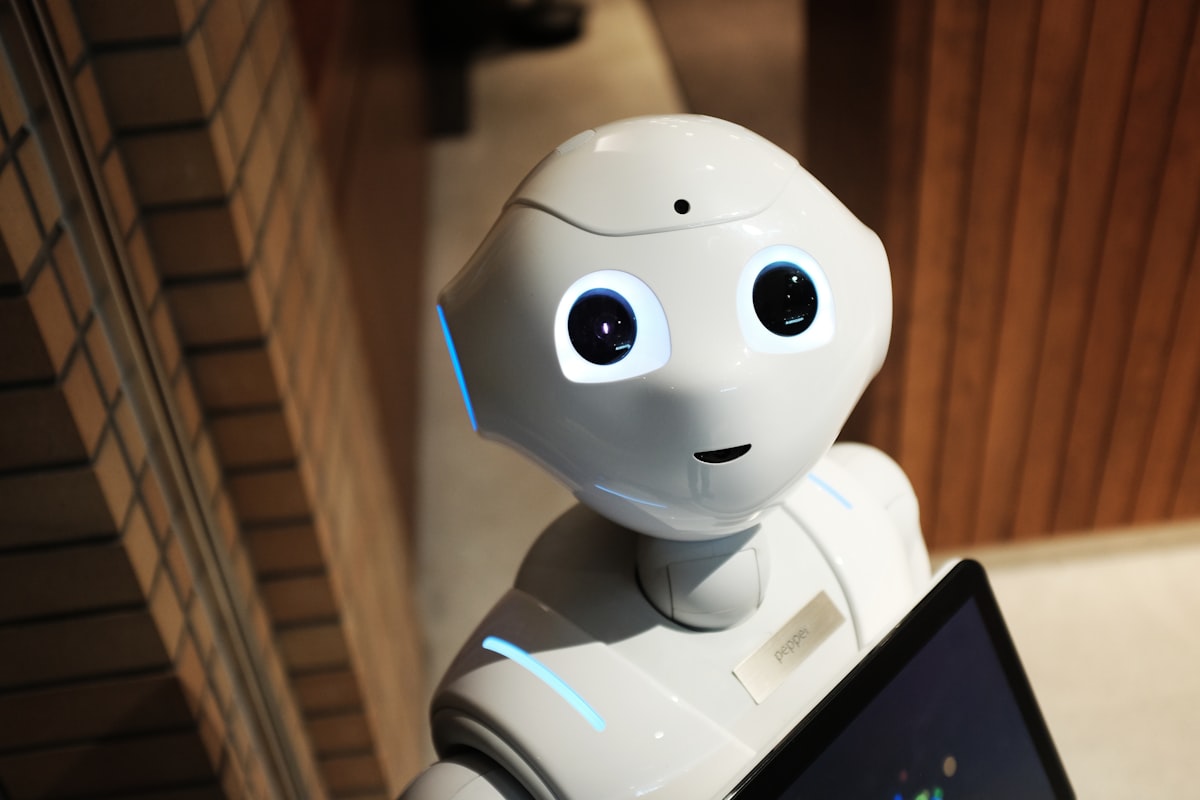
Forward Kinematics & Denavit-Hartenberg (DH) Parameters Explained
Step-by-step mathematical guide to formulating Standard & Modified DH parameter tables, transformation matrix chains, and solving end-effector poses for 3-DOF and 6-DOF robotic arms.
Forward Kinematics computes the Cartesian pose (x, y, z, roll, pitch, yaw) of the end-effector given known joint angles (θ₁, θ₂, ..., θₙ).
Inverse Kinematics (IK): Geometric Decoupling & Numerical DLS Solvers
Solve for the required joint angles to place an end-effector at a desired 3D spatial target using analytical trigonometry and Damped Least Squares (DLS) Jacobian optimization.
Analytical IK is deterministic and computes all possible solutions in microseconds; numerical IK works on arbitrary kinematic topologies.
PID Controller Tuning for Robotics: Practical Anti-Windup & Derivative Filtering
Step-by-step engineering guide to tuning Proportional-Integral-Derivative (PID) controllers for DC motors, robotic arm joints, and drone attitude with low-pass derivative filters.
Proportional gain (Kp) reduces rise time; Derivative gain (Kd) dampens overshoot; Integral gain (Ki) eliminates steady-state error.

Differential Drive Robot Kinematics & Dead-Reckoning Odometry
Derive forward and inverse kinematics for two-wheeled mobile robots, compute linear/angular velocities, and integrate wheel encoder ticks into global 2D pose (x, y, theta).
Given robot linear velocity v and angular velocity w, individual wheel velocities are: v_R = v + (w · L / 2) and v_L = v - (w · L / 2).

Quaternions & 3D Spatial Rotations in Robotics
Escape Euler angle gimbal lock: master unit quaternions, SO(3) Lie groups, spherical linear interpolation (SLERP), and rotation matrix conversions for robot poses.
Euler angles suffer from Gimbal Lock (loss of 1 degree of freedom when pitch reaches ±90°); Quaternions provide singularity-free representation.
The Manipulator Jacobian: Velocities, Static Forces & Singularities
Relate joint angular velocities to end-effector Cartesian velocities, calculate Yoshikawa manipulability ellipsoids, and analyze boundary and interior kinematic singularities.
The Geometric Jacobian maps joint velocities to end-effector twists: V = [v, w]ᵀ = J(q) · q̇.
Trajectory Generation: Cubic & Quintic Polynomial Splines
Generate smooth, jerk-continuous robot motion profiles with boundary position, velocity, and acceleration constraints using 5th-order quintic polynomials.
A path is purely geometric (sequence of poses); a trajectory adds time parameterization (velocities, accelerations, jerks).
Sensor Fusion with Kalman Filters (1D & EKF) for Mobile Robotics
Fuse noisy wheel encoder odometry and drifting IMU gyroscope data into an optimal state estimate using Linear Kalman Filter (LKF) and Extended Kalman Filter (EKF).
The Kalman Filter computes the statistically optimal estimate by weighing prediction uncertainty against measurement noise covariance.